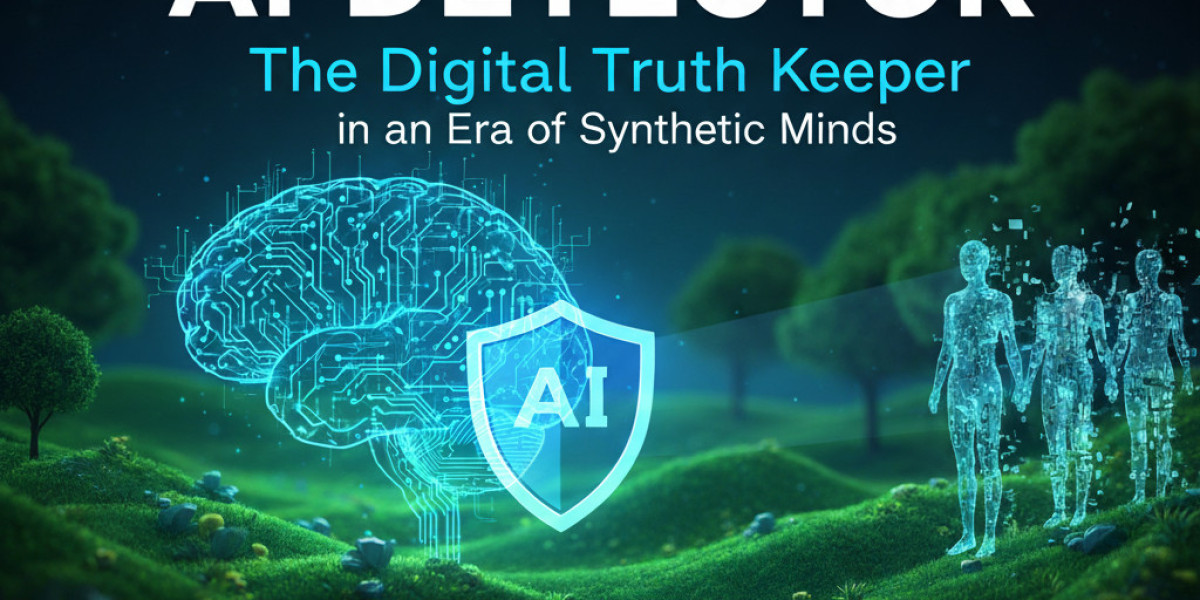

In today’s digital world, information travels faster than ever, and content creation has become a booming universe filled with endless voices, opinions, and ideas. Yet, with this explosion of creativity comes a quiet complication: the rise of automatically generated text that blends so naturally with human writing that it becomes difficult to distinguish between the two. This is where the AI detector emerges—not as a villain, but as a silent guardian shaping the future of authentic communication.
Why the World Suddenly Needs AI Detectors
Artificial intelligence has evolved at lightning speed. Today, tools can generate essays, reports, articles, captions, and even full books in minutes. The convenience is undeniable, but so is the confusion. When AI-generated content is used without transparency, readers may form opinions based on text that technically has no personal experience, emotion, or accountability.
An AI detector acts as a filter that helps identify whether a piece of writing is produced by a human mind or assembled through machine intelligence. This isn’t about discouraging AI usage — it’s about balance, honesty, and clarity. In a digital environment where nearly everyone consumes content online, the need for verification has become as essential as antivirus software once was.
How an AI Detector Actually Works
Most people imagine a complicated machine scanning sentences like a sci-fi gadget. In reality, an AI detector operates using pattern recognition. It studies the text for signals such as:
Overly consistent tone
Predictable word selection
Repetitive sentence flows
Unusual fluency that lacks natural human imperfections
Unlike humans, AI tools generate text with statistically optimized patterns. An AI detector identifies those patterns and estimates the likelihood of machine involvement.
It doesn't necessarily “prove” authorship, but it provides a strong probability score. This empowers teachers, marketers, journalists, and businesses to take informed action.
The Growing Importance for Content Creators
For writers and creators, AI has become a companion — sometimes a partner, sometimes a competitor. When a creator crafts an article, they want their audience to feel the originality behind the words. However, in a world where AI writing tools can publish content at superhuman speed, authentic voices sometimes get overshadowed.
This is where an AI detector becomes an unsung hero. It encourages writers to push for genuine creativity and discourages lazy content stuffing. It restores faith in the true craft of writing. It separates thoughtful innovation from automated noise, ensuring originality still holds value.
AI Detectors in Education: A Balanced Approach
Schools and universities across the globe are grappling with a new challenge: students submitting AI-generated essays as their own work. While technology can improve learning, misusing it dilutes academic growth.
Educators now rely on AI detector technology to maintain fairness. But the intention isn’t punishment—it’s protection. It safeguards students who choose to do honest work and prevents an erosion of academic standards.
At the same time, responsible institutions use detectors as learning tools. Students are encouraged to use AI for brainstorming or understanding topics, but not for replacing real critical thinking.
Businesses and Brands: Why AI Detection Matters
Brands rely on voice consistency, originality, and trustworthiness. When AI-generated content is used incorrectly, it can dilute brand authenticity or even misrepresent its identity.
An AI detector helps companies ensure that their content remains aligned with their values. It also prevents agencies or freelancers from delivering bulk, low-quality AI-written text disguised as bespoke work.
With digital competition rising, businesses cannot afford generic or duplicated content. They must stand out—and authenticity is the most powerful differentiator.
The Future of AI Detectors: Not Just Policing, but Partnering
One of the most fascinating aspects of this technology is its evolution. The future isn’t about AI detectors “catching” people—it’s about creating harmony between human creativity and machine assistance.
Soon, AI detectors may:
Guide writers on how to make their text more unique
Help editors refine tone and style
Offer insights into human readability
Balance AI contributions with human personality
The real future lies not in confrontation but collaboration. AI detectors will serve as tools that elevate content quality, not limit it.
A New Digital Ethic
As we move deeper into the age of automation, society is quietly developing a new digital ethic—one that values honesty, transparency, and originality. Technology is not the enemy; misuse is. The AI detector stands as a symbol of this modern responsibility.
It reminds us that every word we read matters, not just for information but for connection. When readers know who or what crafted a message, trust grows. And trust, in the digital era, is everything.